


What are UGC ads? The meaning in plain English
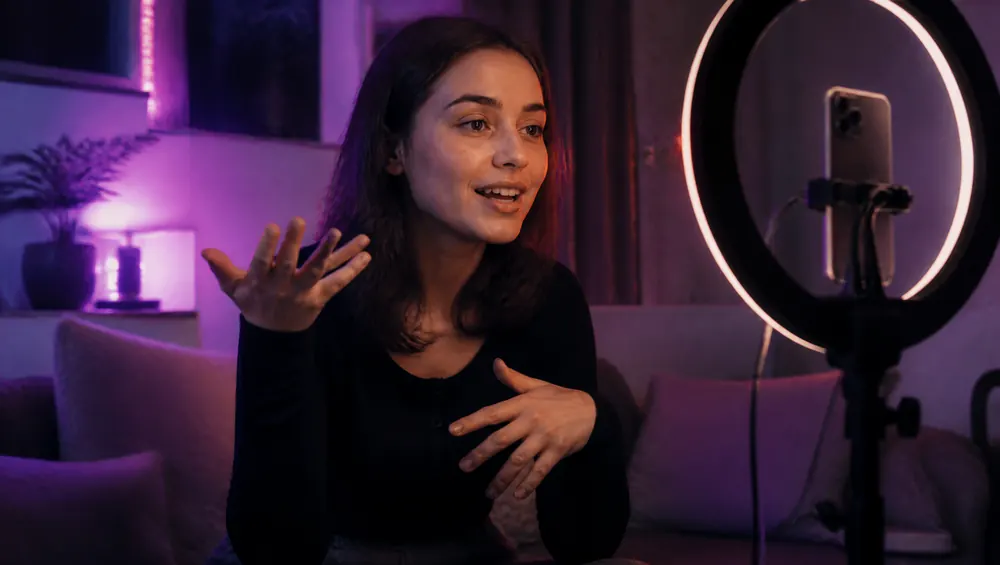
UGC stands for user-generated content. In advertising, a UGC ad is a paid ad whose creative looks and sounds like a regular person's post: shot on a phone, one person talking to the camera, natural light, captions on screen. The brand runs it from its own ad account and controls the audience and budget. Our UGC glossary entry covers the organic side of the term.
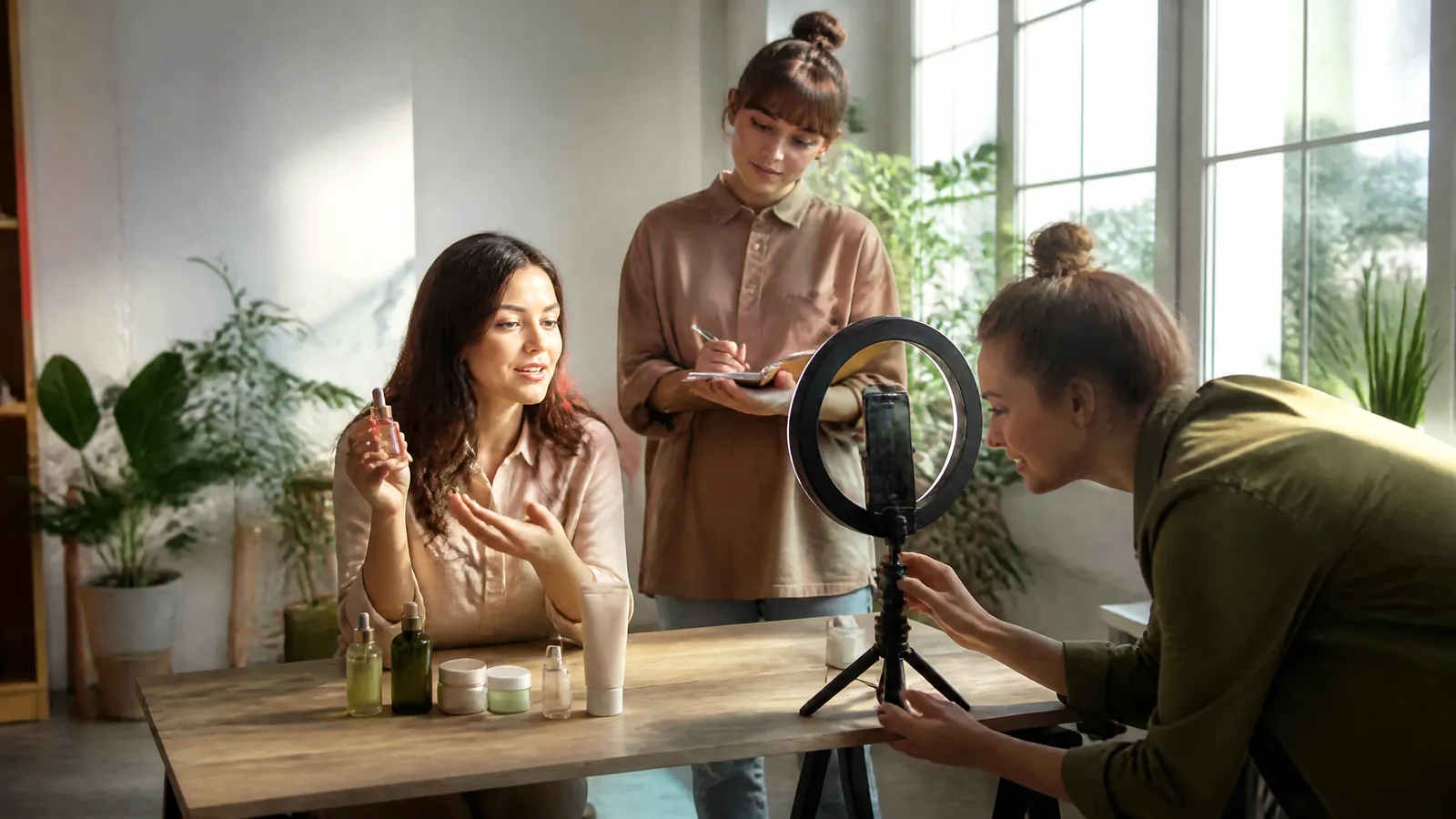
These days the "user" is rarely a random customer. Most UGC video ads come from paid UGC creators, people who film product videos for brands for a fee. They do not need a big following. Real customer clips can still perform, but you need written permission and the quality is a gamble.
Our view: for a business owner, the useful definition is about format, not authorship. If the video feels like a post from a person rather than a commercial from a company, and you pay to show it, treat it as a UGC ad.
- Vertical 9:16 format, filmed for Reels, TikTok and Stories
- A person on screen within the first second
- First-person voice: "I", "my skin", "my kitchen", not "our brand"
- Captions burned into the video, because many people watch with the sound off
- One problem per video, with a single call to action
- Short, usually under a minute
How do UGC ads work?
Mechanically, a UGC ad is just another paid social ad. You upload the video in Meta Ads Manager or TikTok Ads Manager, choose an objective such as leads or sales, set a budget and audience, and pay for impressions in an auction. The difference shows up in how people react during the first few seconds.
A phone-shot video blends into the feed, so fewer people scroll past by reflex. A person describing their own problem and result reads as a recommendation, and that earns trust faster than a brand claim. The platform rewards this. Meta says its auction picks the winning ad based on your bid, the estimated action rate (how likely people are to take your chosen action) and ad quality (Meta Business Help Center: About ad auctions). Creative that holds attention and gets clicks tends to earn cheaper, wider delivery.
The practical consequence: with broad targeting, the creative does a large part of the targeting for you. A hook like "If you are planning a wedding for next summer" will find engaged couples better than any interest setting. So write each hook for one specific person. "Everyone who might buy" is not a person.
You can run a UGC ad from your brand page, or from the creator's handle through Meta partnership ads or TikTok Spark Ads, often called whitelisting. We start from the brand account. It needs no extra permissions and keeps all the comments in one place. The creator's handle is worth adding only when their name genuinely adds credibility.
- Brief written for one audience, with one offer
- Creator films the video in 9:16
- Editor cuts several versions, usually different hooks on the same body
- Versions go live in the same ad set with the same budget
- Losers are paused after enough spend to judge, winners get more budget
- New videos replace tired ones before results drop
UGC ads vs influencer ads vs studio ads
People mix these up all the time, and the difference decides what you are paying for. With a UGC ad you buy the video and run it yourself. An influencer post buys you access to someone else's audience. A studio ad buys production quality and full brand control.
For a small or mid-size business chasing leads or sales, we would start with UGC ads almost every time. You keep control of targeting and budget. New versions take days, and the money for one polished shoot can pay for five tested angles. Influencer posts earn their place for awareness in a tight niche, studio work for a brand launch or premium positioning.
| UGC ad | Influencer post | Studio brand ad | |
|---|---|---|---|
| What you pay for | The video and the rights to use it | Access to the creator's followers | Production, crew, editing |
| Where it runs | Your ad account, paid placement | The creator's own profile | Your ad account, TV, YouTube |
| Does follower count matter | No | Yes, it is the product | Not relevant |
| Control over targeting and budget | Full | Little, it depends on organic reach | Full |
| Time to make a new version | Days | Weeks, needs the creator to post again | Weeks |
| Best use | Direct response: leads, sales, testing angles | Awareness in a niche community | Launches, premium brands, TV |
Types of UGC video ads that sell
Most UGC video ads fall into a handful of formats. The angle matters more than the format. Still, each format suits a different stage of the buying decision, and picking the wrong one for a cold audience wastes the test.
For a service business, start with problem and solution, plus a walk-through of what happens at the first appointment. The biggest objection to a service is not knowing what comes next, and a person calmly showing the process removes it. One warning before you film: Meta restricts some before-and-after content in health, weight loss and aesthetic categories, so read the platform policy first.
- Testimonial: a person tells their story and result. Best for warm audiences and for products people already understand.
- Problem and solution: opens on a pain the viewer recognizes, then shows the fix. Our default for cold audiences.
- Unboxing or first impressions: packaging, feel, size, the moment of trying it. Strong for e-commerce and gifts.
- Demo or tutorial: how to use it, step by step. Good when the product needs explaining.
- Before and after: visible change. Powerful, and heavily restricted in some categories.
- Objection buster: "I thought it would be too expensive, but...". Good in remarketing.
- Service walk-through: the visit, the consultation, the result. Built for clinics, schools, venues and local services.
Anatomy of a UGC video ad, second by second
A UGC video ad that sells follows a simple order. The timings are a guide, not a rule. Break the order, though, and the video usually loses people before it reaches the point it was made to deliver.
The hook does most of the work. If nobody watches past second 3, the rest of the video might as well not exist. That is why our UGC team of 8 creators films 3 hook versions for every idea and keeps the body identical. When only the hook changes, the test tells you exactly what worked. Everything is shot in 9:16 for Reels, TikTok and Stories.
Five mistakes to avoid: opening on the logo and brand name, a script that reads like ad copy, six benefits where one would do, no captions, and a call to action that asks for something the landing page does not offer. None of these costs anything to fix. Fix them before you spend another dollar on ads.
| Time | Part | What it does | Example for a cooking class |
|---|---|---|---|
| 0 to 3 s | Hook | Names the problem or the result, with on-screen text that repeats it | "I could not cook rice without burning it. Six weeks later I hosted dinner for eight." |
| 3 to 10 s | Problem | Makes the viewer feel seen | Takeout every night, money and time gone |
| 10 to 25 s | Solution | Shows the product or service in use, not just held up | Clips from the class, hands on the knife |
| 25 to 35 s | Proof | One concrete detail or answered objection | "Classes are after work, and you take the food home." |
| Last 5 s | Call to action | One action that matches the landing page | "Tap below to book your first class for Thursday." |
How to get UGC video ads made: step by step
You can ask existing customers, hire creators through a marketplace, or work with a team that writes, films, edits and runs the ads. Customers cost least, but they are slow and unpredictable. Marketplaces are flexible, though the brief, the editing and the testing stay on your desk. A full team costs more per video and gives you back the hours you would spend managing it all.
On price, Shopify, citing creator marketplace data, reports roughly $100 to $150 per video at the entry level and $300 to $500 or more for experienced creators, with usage rights raising the price (Shopify on UGC ads). Ad spend comes on top, and our guide to how much Facebook ads cost covers that side. Our advice: buy three or four cheaper videos from different creators before you buy one expensive one. Nobody can predict the winner, including us.
AI avatars can work for product explainers. Do not use them as fake customers. The FTC's rule on fake reviews and testimonials, finalized in 2024, bans testimonials from people who do not exist, including AI-generated ones. A real person with real experience is the safer choice, and in our view the more convincing one.
- Pick one goal and one metric. Leads, purchases or bookings, measured as cost per result.
- Write a one-page brief. Who the viewer is, their problem, 3 hook ideas, claims you can prove, words to avoid, the call to action, 9:16 format and target length.
- Choose creators who look like your buyers. A 50-year-old homeowner trusts a peer more than a 20-year-old talking about roofs.
- Send the product or book the visit. The creator must actually use it. Fake experience shows on camera and breaks the rules.
- Agree usage rights in writing before filming starts.
- Edit into versions. Same body, different hooks, captions on every one.
- Launch a fair test. Same ad set, same budget, enough spend to judge.
- Refresh weekly. We add new ad creatives every week, because even winning videos tire as the same people see them again.
Disclosure and usage rights in the US and the UK
Regulators treat a paid UGC creator as an endorser, even one with 300 followers. In the US, the FTC says a payment or free product is a material connection that viewers should know about. The endorsement must reflect the creator's honest experience, and the advertiser stays responsible for what the creator says. Handing the work to an agency does not move that responsibility. The FTC also says a disclosure in a video belongs in the video itself, spoken and on screen when the endorsement is spoken (FTC Endorsement Guides: What People Are Asking).
In the UK, the ASA and CAP rules say marketing must be obviously identifiable as marketing. Where context does not make that clear, it needs an upfront label such as "Ad" (ASA and CAP guide for influencers). A brand that pays for and controls the content shares responsibility with the creator.
In practice, a video running from your brand page with the platform's "Sponsored" label is clearly an ad. The creator still must not pose as an unpaid, random customer, and any result they mention must be typical or come with the typical result stated. Running it from the creator's handle? Then add the platform's paid partnership label and an "Ad" mention. This is our reading of the rules, not legal advice, and health or finance brands should have a lawyer check scripts.
Rights are the other half. A contract that covers only organic posting does not let you run the video as a paid ad, and that is the first clause we would check before any creator starts filming.
- Which platforms the video can appear on
- How long you can run it: 3 months, 12 months or in perpetuity
- Paid use explicitly allowed, not only organic posting
- Whether you can run it from the creator's handle (partnership ads, Spark Ads)
- Whether you get raw footage for your own edits
- Exclusivity: can the creator film for your competitors
How to measure UGC ads, and when they are not worth it
Views feel good and pay nothing. We judge every UGC ad on the cost of the result it was built for. The earlier metrics only explain why it won or lost. You can check your own numbers with our CPL calculator.
For scale: we generated 2,110 leads from Meta campaigns in 2026, with 2.7 million ad impressions, and new creatives went into those accounts every week. On a hotel and corporate events account, cost per lead fell from $9.92 to $3.31 between April and August 2026 (converted from PLN), a drop of about 66%. Two caveats. Those campaigns run in Poland, where ad auctions are cheaper than in the US or UK, so the absolute numbers will not transfer. And the drop came from creatives, lead forms and optimization working together, not from video alone.
Sometimes UGC ads are the wrong spend. If your budget covers one video running for a few days, you cannot test, and testing is where UGC earns its money. If the offer is weak or the landing page leaks, a better video just sends more people to a broken step. Products that are hard to show on a phone, and B2B deals with a tiny senior audience, often do better with other formats. Fix the offer first. Videos come second.
| Metric | How it is calculated | What it tells you | If it is weak, change |
|---|---|---|---|
| Hook rate | 3-second video views divided by impressions | Whether the opening stops the scroll | The first line and first frame |
| Hold rate | Views to the end, or ThruPlays, divided by 3-second views | Whether the story keeps people | The middle: cut filler, add proof |
| <a href="/resources/glossary/ctr/">CTR</a> (link) | Link clicks divided by impressions | Whether the video sells the click | The offer and the call to action |
| Conversion rate | Leads or sales divided by clicks | Whether the page keeps the promise | The landing page or form |
| <a href="/resources/glossary/cpl/">CPL</a> or cost per purchase | Spend divided by results | Whether the ad pays for itself | Everything above, in that order |
Want UGC video ads made and run for you?
Our UGC video ads service covers the whole chain: the brief, 8 creators, 3 hooks per idea, editing in 9:16, and running the ads in your Meta Ads campaigns. Campaigns go live in 3 days, and fresh ad creatives arrive every week. The whole ad budget goes to Meta and Google. We take no commission on ad spend.
Not sure UGC ads fit your business and budget? Book a free 30-min strategy call on Google Meet and we will tell you straight. Prefer to look first? Browse our results and portfolio.
Frequently asked questions
01Are UGC ads the same as influencer marketing?
No. With a UGC ad you pay for the video and run it from your own ad account, with your own targeting and budget. With influencer marketing you pay for access to the creator's followers, and the post lives on their profile. UGC creators do not need an audience at all.
02How much do UGC ads cost?
You pay for the video and, separately, the ad spend. Shopify, citing creator marketplace data, reports roughly $100 to $150 per video at the entry level and $300 to $500 or more for experienced creators, with usage rights adding to the price. Budget for several videos from different creators, because nobody can predict which one will win.
03Do UGC ads need to be labeled as ads?
A paid creator is an endorser under FTC rules in the US and ASA and CAP rules in the UK. A video running from your brand page with the platform's Sponsored label is clearly an ad, but the creator must not pose as an unpaid customer. When the video runs from the creator's own handle, use the paid partnership label and an upfront Ad mention.
04Do UGC creators need a lot of followers?
No. A UGC creator is paid to make the video, not to post it, so follower count does not matter. Look for someone who resembles your buyers and can deliver a hook naturally. They also have to actually use the product.
05Can I use my customers' videos in my ads?
Yes, with written permission that covers paid advertising, the platforms and how long you can run it. Customer videos are often very credible but uneven in quality, so many brands mix them with creator videos. If you gave the customer anything of value, such as a discount or free product, that connection must be disclosed.
06Do UGC ads work for service businesses?
Yes, often very well. The main objection to a service is not knowing what to expect, and a person walking through the visit or the class removes that doubt. Pair the video with a short lead form or a booking page, so the ad's promise matches the next step.
Was this guide helpful?One click helps us write better ones.
Thanks! The next guide is waiting below.
Thanks for being honest. Ask us directly: book a free 30-min call.